Why Consider Proactive Screening Test?
Some patients want to learn more about their health and take preventive steps to reduce the risks of developing certain diseases. A proactive screening test gives healthy individuals, without a family history, information about their chance of having a genetic condition that is medically actionable, one where preventive steps can be put in place to improve the likelihood of living a long and healthy life.
1 in 300 people have a genetic cancer syndrome and 1 in 200 people have a genetic heart disease
What is included in the Blueprint Genetics Proactive Screening Test?
The Proactive Screening Test is a selection of genes that are associated with a number of autosomal recessive, autosomal dominant and X-linked conditions. These include genes linked to:
1. Genetic conditions identified as medically actionable by the American College of Medical Genetics (ACMG)
2. Additional cancer, cardiovascular and metabolic conditions where early identification may have a treatment that can improve the outcome.
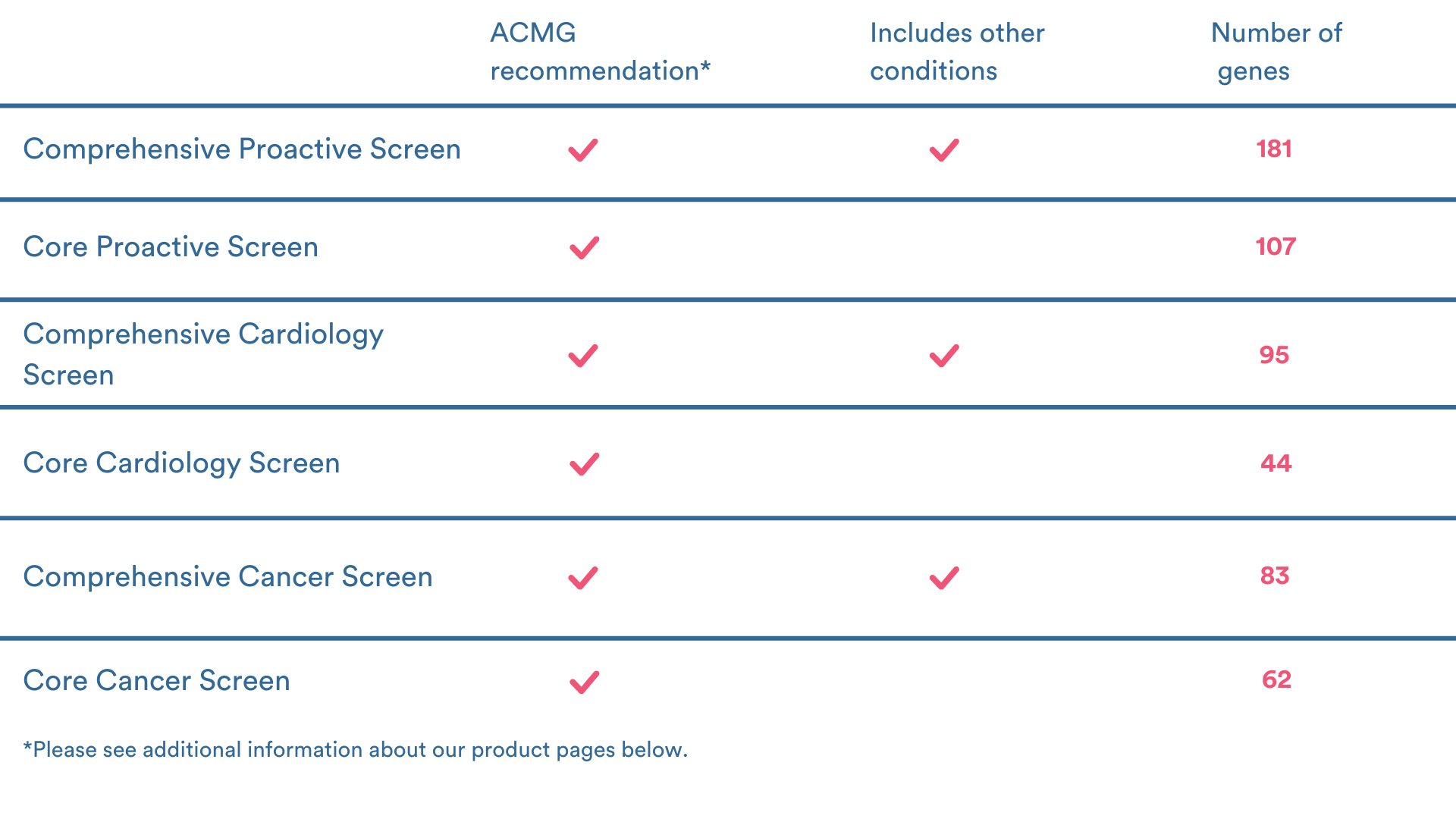
Note: Blueprint Genetics screening panels, or screening tests, do not screen for all conditions and do not diagnose a disease or disorder. Based on results, screening tests may require follow-up medical and genetic counseling and other (non-genetic) testing.
Why Choose Blueprint Genetics Proactive Tests?
- All genes identified as medically actionable by the American College of Medical Genetics and Genomics (Miller DT et al., 2022 PMID: 35802134)
- Additional cancer, cardiovascular, and metabolic conditions that, if identified early, have treatments available that may improve outcomes
- Covers 181 genes
- Both sequence variant and deletion/duplication (copy number variant) analyses are performed
- Includes disease-associated non-coding and deep intronic variants (as reported in HGMD and ClinVar)
- Only variants classified as likely pathogenic and pathogenic based on a modified ACMG/AMP classification scheme will be reported
- Most results will be reported in 28 days
- Tests can be ordered and results viewed on Nucleus, our online platform